
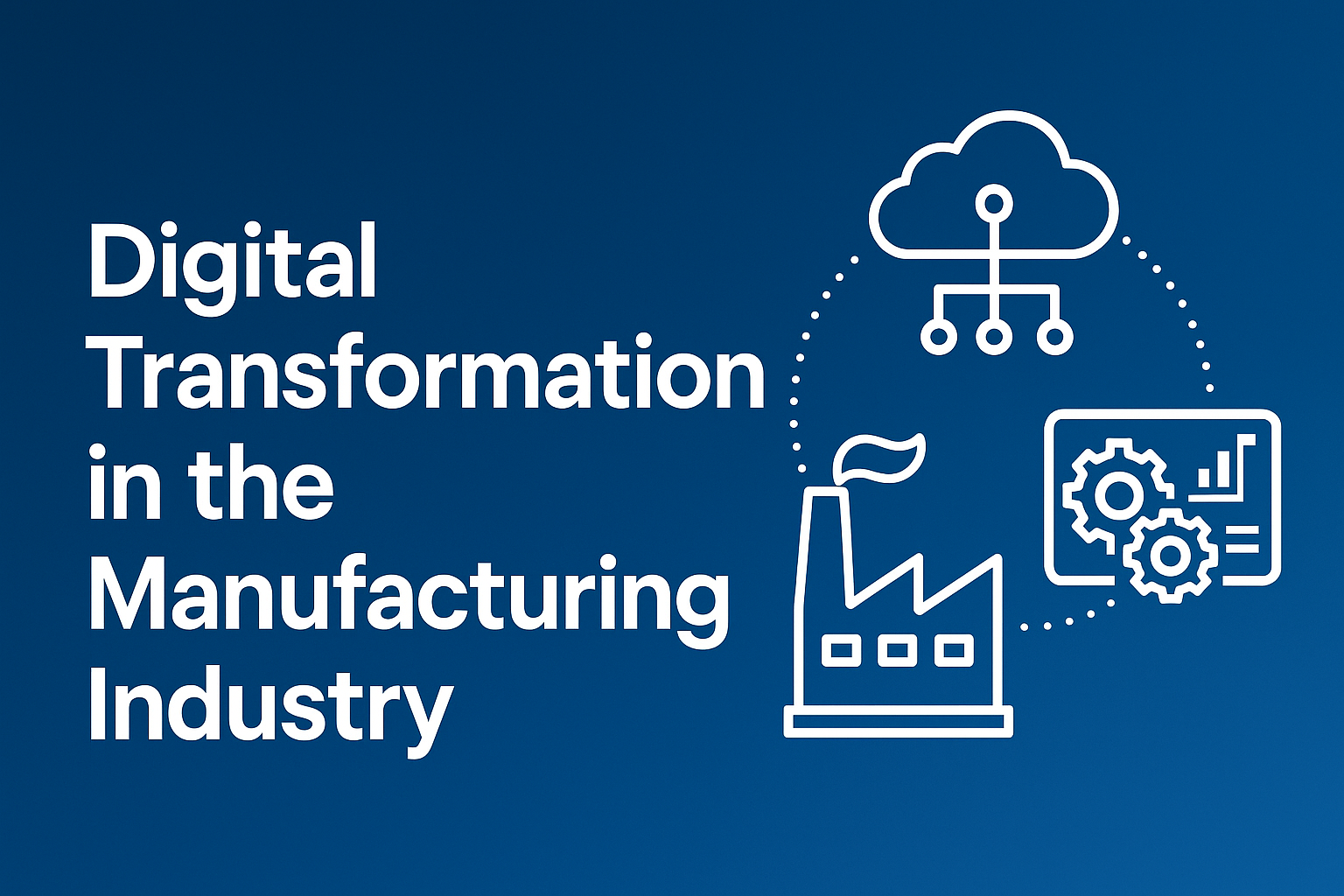
Digital Transformation in Manufacturing: A 2025 Guide
Table of Contents
Toggle
Digital transformation has become the defining force reshaping the global manufacturing landscape. It is no longer a technical upgrade but a complete redesign of how factories operate, how products are created, and how decisions are made. Manufacturers are shifting from traditional, reactive models to connected, intelligent, and data-driven systems that boost efficiency, agility, and competitiveness.
This article explores digital transformation from the macro level—industry forces, strategic pillars, and major technologies—down to the micro level—factory execution, machine workflows, and real scenarios. Each section offers practical steps, measurable insights, and a problem-solving perspective aimed at leaders seeking real transformation, not theoretical promises.
Macro Landscape of Digital Transformation in Manufacturing
The Smart Factory Revolution: How Digital Transformation is Reshaping Manufacturing
Global manufacturing is under pressure from several converging forces.
First, competition is intensifying. Manufacturers must deliver more personalized products at lower prices and with shorter lead times.
Second, supply chain volatility is increasing. Real-time adaptability is now a survival requirement.
Third, technology has matured. Tools once considered expensive—like IoT sensors and AI analytics—are now accessible and scalable.
Insight:
Manufacturers that embrace transformation early gain an irreversible advantage in speed, quality, and resilience.
1.2 Key Industry Shifts Driving Change
Three major shifts are redefining the manufacturing landscape:
Shift from labor-intensive to intelligence-intensive operations.
Machines are becoming intelligent collaborators, not silent assets.Shift from hindsight to foresight.
Decisions rely less on historical reports and more on predictive insights.Shift from isolated systems to connected ecosystems.
Factories are becoming digitally integrated environments.
1.3 The Core Technologies Powering the Smart Factory
Several critical entities form the foundation of any digital transformation strategy. Each has a defined purpose and measurable value.
Smart Factory
A fully connected manufacturing environment where machines, systems, and humans exchange data in real time.
Insight: Smart factories enable continuous optimization, not periodic improvements.
Industry 4.0
A strategic framework that integrates digital technologies—including IoT, automation, AI, and cloud computing—into production and supply chains.
Insight: Industry 4.0 redefines manufacturing as a digital service, not just a physical process.
Digital Thread
A unified flow of data that connects every stage of a product’s lifecycle.
Insight: The digital thread eliminates data silos and ensures decisions are always based on accurate, current information.
Digital Twin
A virtual replica of a physical product, machine, or system used for simulation, prediction, and optimization.
Insight: Digital twins reduce risk by allowing companies to test ideas virtually before implementing them physically.
MES (Manufacturing Execution System)
Software that manages and monitors every step of production, from raw materials to finished products.
Insight: MES serves as the operational “brain” that connects machines, orders, people, and workflows.
1.4 Industry Challenges Digital Transformation Solves
Manufacturers continue to battle persistent operational problems:
Unplanned machine downtime
Rising energy and material waste
Fragmented data
Inconsistent product quality
Slow reporting and decision-making
Inefficient maintenance processes
Skill gaps in the workforce
Insight:
Digital transformation solves these issues by shifting operations from reactive to predictive and controlled.
Strategic Transformation (Macro → Organizational)
2.1 The Strategic Pillars of Transformation
A successful transformation requires a structure based on three strategic pillars:
Pillar 1: Technology Modernization
This includes upgrading legacy systems, deploying IoT sensors, implementing MES platforms, and adopting AI-driven tools.
Insight: Technology is the enabler, but alignment with business goals is what creates value.
Pillar 2: Operational Excellence
Process redesign eliminates inefficiencies, standardizes workflows, and improves performance.
Insight: You cannot digitize chaos—process discipline must come first.
Pillar 3: Workforce Enablement
Upskilling employees ensures technology is adopted and used effectively.
Insight: Human capability determines transformation success more than software capability.
2.2 The Manufacturing Digital Transformation Roadmap
A clear roadmap helps companies avoid wasted budgets and misaligned initiatives.
The roadmap includes four phases:
Phase 1: Assessment
Evaluate current systems
Map workflows
Identify bottlenecks
Assess data readiness
Insight: Assessment avoids blind spending and guides precise investment.
Phase 2: Design
Build a transformation blueprint
Define KPIs
Prioritize high-impact areas
Insight: Good design prevents complexity and accelerates ROI.
Phase 3: Implementation
Deploy scalable platforms
Integrate data sources
Train teams
Execute pilot tests
Insight: Starting small reduces risk and builds organizational confidence.
Phase 4: Scaling
Expand proven solutions
Strengthen data governance
Extend automation to other sites
Insight: Scaling transforms isolated improvements into enterprise-wide gains.
2.3 Culture and Organizational Readiness
Culture is often the difference between success and failure. A digital-ready culture includes:
Trust in data-driven decisions
Transparency across departments
Acceptance of continuous improvement
Collaboration between operations and IT
Insight: Transformation requires cultural courage, not just technical investment.
Technology Deep Dive (Micro-Level Technologies)
3.1 IoT and the Connected Factory
IoT connects machines, sensors, and systems into one intelligent environment.
Use Cases
Real-time machine monitoring
Energy management
Environmental control
Production tracking
Insight: Visibility is the first step toward stability and optimization.
3.2 Automation and Advanced Robotics
Robotics has evolved from fixed automation to flexible, intelligent systems.
Types
Traditional robots
Cobots (collaborative robots)
AMRs (autonomous mobile robots)
Hybrid robotic systems
Insight: Automation enhances human capacity; it doesn’t eliminate human value.
3.3 Artificial Intelligence and Machine Learning
AI analyzes patterns and generates insights that human teams cannot detect manually.
Applications
Predictive maintenance
Automated quality inspection
Smart scheduling
Supply chain forecasting
Insight: AI makes operations proactive, not reactive.
3.4 Cloud and Edge Computing
Both play distinct roles.
Cloud
Centralized analytics, scalable storage, remote access.
Edge
Local real-time processing near machines.
Hybrid
Combines the strengths of both.
Insight: A hybrid architecture balances speed and computing power.
3.5 Cybersecurity as a Core Component
Digital systems require protection at all levels.
Layers of protection
Identity controls
Network security
Device-level safeguards
Continuous threat monitoring
Insight: Cybersecurity is not optional—it is integral to operational continuity.
Micro-Level Execution in the Smart Factory
4.1 Replacing Paper with Digital Workflows
Paper slows processes and hides inefficiencies. Digital workflows replace:
Physical checklists
Manual inspection logs
Paper-based work orders
Handwritten reports
Insight: Digitization speeds execution and enables accurate reporting.
4.2 Real-Time Production Monitoring
MES systems and IoT sensors track:
Output
OEE
Cycle time
Machine utilization
Scrap rates
Downtime
Insight: Real-time data enables immediate corrective action.
4.3 Predictive Maintenance Workflow
Predictive maintenance uses AI to forecast failures before they happen.
A standard workflow includes:
Collect machine data
Train prediction models
Detect anomalies
Generate alerts
Schedule maintenance
Verify performance
Insight: Predictive maintenance turns uncertainty into control.
4.4 Quality, Traceability, and Compliance
Digital traceability ensures compliance in industries like automotive, pharmaceuticals, and food.
Technologies
RFID
Barcode systems
Blockchain
ERP + MES integration
Insight: Traceability protects brand reputation and reduces recall costs.
Scenario — A Mid-Sized Factory’s Digital Journey
5.1 Background: The Challenge
“Axis Manufacturing,” a mid-sized metal components producer, faces:
Frequent machine stoppages
High scrap waste
Inaccurate production reporting
Long order lead times
Limited visibility on the shop floor
Insight: These pain points are common for companies with legacy processes.
5.2 Step 1: Discovery and Assessment
Axis evaluates plant data and identifies:
Machines running below capacity
No centralized production monitoring
Operators using paper for quality checks
Maintenance performed only after breakdowns
Insight: Honest assessment reveals hidden losses and missed opportunities.
5.3 Step 2: Deploying IoT for Visibility
Axis installs IoT sensors on critical machines.
The sensors capture:
Temperature
Vibration
Power load
Cycle time
Insight: Measuring the right parameters is more important than collecting all possible data.
5.4 Step 3: Implementing MES for Control
Axis integrates an MES system to manage:
Work orders
Operator tasks
Quality standards
Machine performance
Shift reports
Insight: MES transitions the factory from disconnected tasks to integrated workflows.
5.5 Step 4: Introducing Predictive Maintenance
AI models analyze sensor data and detect failure patterns.
Results:
Early fault detection
Reduced emergency repairs
Lower maintenance cost
Higher machine availability
Insight: Predictive models create operational confidence by preventing surprises.
5.6 Step 5: Upskilling the Workforce
Axis trains operators and supervisors on:
Reading dashboards
Root-cause analysis
Preventive actions
Data interpretation
Insight: Skilled teams multiply the value of digital tools.
5.7 Final Results
After nine months:
Downtime reduced by ٣٨٪
Scrap reduced by ٢٥٪
OEE improved by ١٦٪
Reporting time reduced from ٢٤ ساعة to 10 دقائق
Customer lead time improved by ١٩٪
Insight: Consistent small improvements create significant competitive advantage.
Tools, Frameworks, and Essential Guides
6.1 Digital Maturity Framework
| Level | Definition | Focus |
|---|---|---|
| Level 1 | Manual operations | Basic automation |
| Level 2 | Data visibility | Sensors + dashboards |
| Level 3 | Integration | MES + ERP + IoT |
| Level 4 | Prediction | AI + machine learning |
| Level 5 | Autonomy | Self-optimizing systems |
Insight: Knowing your current level defines your next realistic step.
6.2 Operational KPIs for Smart Factories
Key Operational KPIs
OEE
Scrap percentage
Cycle time
Downtime
Throughput
Financial KPIs
Cost per unit
Working capital
Inventory turnover
Workforce KPIs
Training hours
Error rate
Adherence to digital workflows
Insight: KPIs guide the transformation and validate impact.
6.3 Step-by-Step Digital Transformation in Manufacturing Implementation Guide
Step 1: Set business goals.
Transform for value, not for technology.
Step 2: Form a cross-functional team.
Include IT, operations, engineering, and finance.
Step 3: Identify high-priority use cases.
Maintenance, scheduling, and quality deliver fast returns.
Step 4: Build scalable architecture.
Avoid fragmented tools.
Step 5: Train and support teams.
Adoption determines ROI.
Step 6: Monitor and refine continuously.
Digital transformation is a cycle, not an event.
Insight: Incremental progress delivers long-term transformation.
Digital Transformation in Manufacturing: Challenges and Solutions
7.1 Legacy Machines
Challenge: No built-in connectivity.
Solution: Use IoT retrofitting.
Insight: Retrofitting is cost-effective and accelerates modernization.
7.2 Skill Gaps
Challenge: Limited digital expertise.
Solution: Structured training and certification.
Insight: Investment in people creates resilience.
7.3 Data Fragmentation
Challenge: Systems do not communicate.
Solution: Unify ERP, MES, and IoT platforms.
Insight: Integration drives the biggest efficiency gains.
7.4 Organizational Resistance
Challenge: Change is uncomfortable.
Solution: Make early wins visible.
Insight: Success builds momentum faster than presentations.
The Future of Digital Transformation in Manufacturing
8.1 Autonomous Production
AI-driven factories will make autonomous decisions on:
Scheduling
Quality control
Maintenance
Optimization
Insight: Autonomy increases reliability and reduces dependence on manual intervention.
8.2 Sustainable and Green Manufacturing
Digital tools reduce:
Waste
Water usage
Energy consumption
CO₂ emissions
Insight: Sustainability becomes a competitive advantage, not a compliance burden.
8.3 Augmented Workforce
Technology elevates human roles to:
System monitoring
Data analytics
Performance optimization
Insight: The future workforce is digitally enabled, not digitally replaced.
Final Thoughts :
Digital transformation is redefining who wins in the manufacturing sector. It aligns technology, people, and processes into one intelligent ecosystem that delivers speed, precision, and resilience.
Manufacturers who modernize their systems, upskill their workforce, and adopt data-driven operations will outperform competitors across quality, cost, and customer satisfaction.
Transformation is not theoretical. It is measurable, practical, and achievable when approached systematically—from macro strategy to micro execution on the factory floor.
Trax Company can enable this shift through structured frameworks, expert implementation, and profound industry experience. Manufacturers ready to transform today will be the leaders of tomorrow’s industrial economy.
It is the shift from manual, paper-based, and disconnected operations to connected, data-driven, and automated systems.
Competition is global, customer expectations are higher, and supply chains are more volatile. Technology is also more accessible than ever.
Start with an assessment: map processes, evaluate data readiness, identify bottlenecks, and prioritize high-impact use cases.
Key technologies include IoT, MES, ERP integration, robotics, AI, cloud, edge computing, and cybersecurity tools.
IoT sensors collect real-time data about machine health, energy use, and production output.
A Smart Factory connects machines, systems, and people through continuous real-time data exchange.
A Digital Twin is a virtual replica of a product or machine.
A Digital Thread is a continuous data flow across the product lifecycle.





No comment