
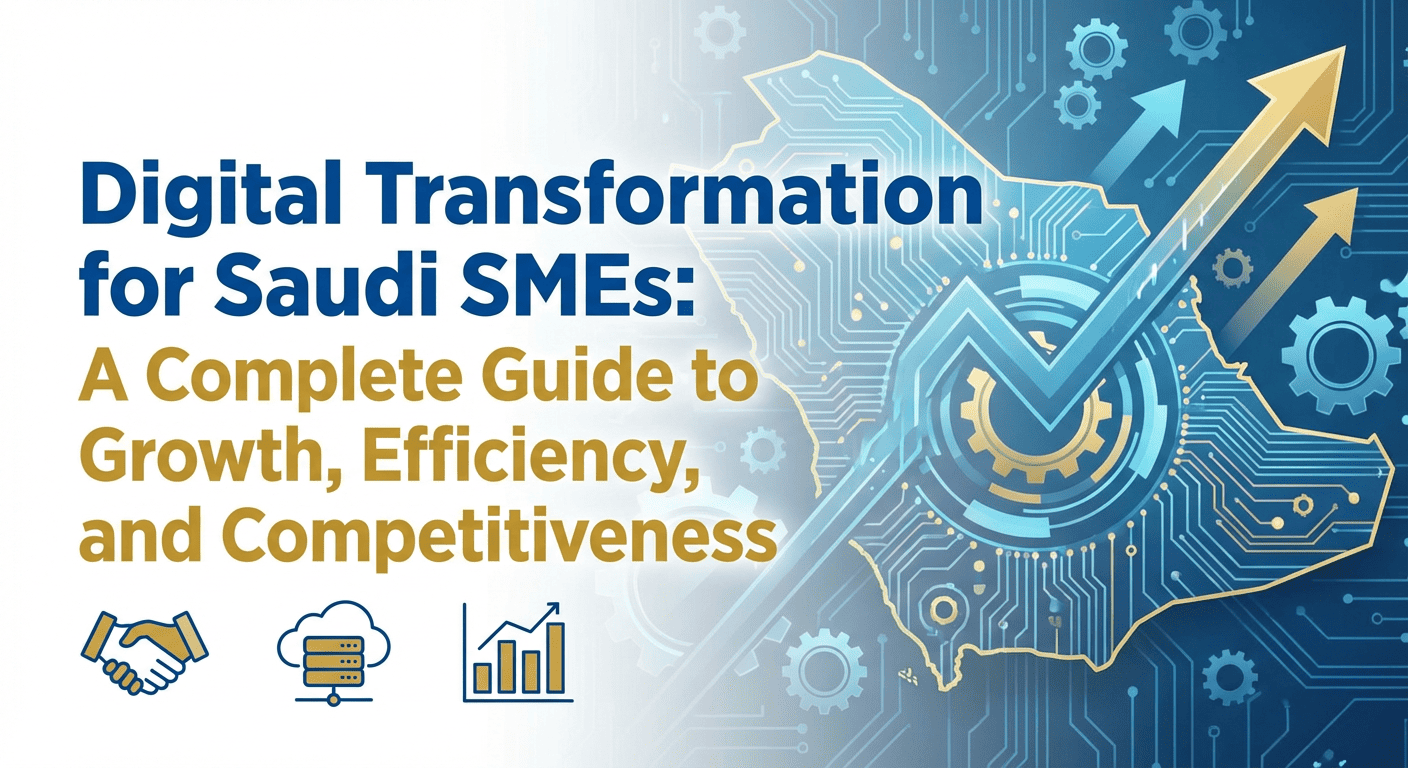
Introduction: Why Digital Transformation Is Now a Survival Priority for Saudi SMEs
Table of Contents
ToggleIn today’s business landscape, traditional ways of operating are no longer enough for SMEs to stay competitive. Markets are faster, customer expectations are higher, operational costs are rising, and digital-native competitors are expanding aggressively. This is especially true in Saudi Arabia, where Vision 2030 has accelerated the shift toward a digital-first economy. As government programs, funding initiatives, and national strategies push toward technological adoption, SMEs are expected to follow — not gradually, but urgently.
This is not just about “technology upgrades.” It is about rethinking how an organization operates, serves customers, manages resources, and uses data to make decisions. Digital transformation for Saudi SMEs is the difference between businesses that scale and businesses that stagnate.
Before diving into the details, here are the key realities shaping the digital landscape for SMEs today:
Key facts driving Digital Transformation for Saudi SMEs:
SME growth is a core pillar of Vision 2030, with the target of reaching 35% GDP contribution.
Government programs such as Monsha’at, Madad, Digital Government Authority (DGA), and Saudi Payments provide infrastructure and funding for digitization.
Customer expectations have shifted toward online service, faster delivery, transparent processes, and seamless digital experiences.
Cloud services, automation, and ERP systems have become accessible and affordable for small businesses.
Competition is rapidly increasing as global digital platforms enter the Saudi market.
1. Understanding Digital Transformation for Saudi SMEs
Digital transformation for Saudi SMEs refers to the adoption of technologies that improve efficiency, decision-making, customer experience, and business scalability. But more importantly, it is a shift in mindset — a move toward data-driven operations instead of manual, fragmented processes.
1.1 What Digital Transformation Actually Means
Digital transformation includes:
Moving from paper-based or manual operations to automated workflows
Digitizing financial, operational, and customer-facing processes
Using cloud platforms instead of outdated systems
Leveraging analytics for smarter decision-making
Integrating tools that connect departments end-to-end
1.2 Why It Matters in Saudi Arabia
Saudi SMEs operate within a rapidly evolving digital ecosystem.
Drivers include:
Government mandates for e-invoicing (ZATCA Phase 1 & 2)
Growing e-commerce adoption across the Kingdom
Financial digitalization led by SAMA and local banks
Increased availability of Arabic-language digital tools
New funding programs supporting SME digital adoption
In short, Digital transformation for Saudi SMEs is no longer optional — it is a strategic necessity.
2. The Key Challenges Facing Saudi SMEs — And How Digital Transformation Solves Them
Most SMEs in Saudi Arabia face similar operational and growth challenges. Below are the most common obstacles preventing scale — and the digital solutions that address them.
2.1 Manual and Inefficient Processes
Many SMEs still rely on:
Paper records
Excel sheets
Phone-based approvals
Manual inventory counts
Digital transformation benefit: Cloud ERP, automated invoicing, workflow approvals, and digital dashboards eliminate waste and human error.
2.2 Lack of Financial Visibility
Without structured financial systems, SMEs struggle with:
Unclear profit margins
Cash flow issues
Delayed reconciliations
Solution: Business management systems with real-time financial dashboards enable accurate forecasting and smarter spending decisions.
2.3 Difficulty Attracting Customers
Today’s Saudi customers expect:
Fast response time
Online purchasing
Delivery tracking
Digital communication channels
Solution: Digital transformation introduces CRMs, e-commerce portals, social commerce, and automation tools to boost sales.
2.4 Limited Scalability
Growing manually eventually leads to:
Overloaded staff
Operational chaos
Lost opportunities
Solution: Automation allows SMEs to scale operations without proportionally increasing headcount.
2.5 Compliance Requirements
Saudi SMEs must comply with:
ZATCA e-invoicing
VAT filing
Cybersecurity standards
Government digital portals
Solution: Digital tools ensure accuracy, compliance, and audit-readiness.
3. The Core Pillars of an Effective Digital Transformation for Saudi SMEs
A successful transformation requires a structured approach rather than random tool adoption.
3.1 Business Process Digitization
This includes:
Digital HR systems
Electronic approvals
Automated inventory management
Digital procurement
Barcode/WMS systems for warehouses
3.2 Financial Digitization
Key components:
Cloud accounting
Arabic e-invoicing integrations
Automated VAT calculations
Real-time expense tracking
3.3 Customer Experience Transformation
Tools include:
CRM systems
Chatbots
Social selling platforms
Self-service portals
3.4 Cloud ERP Adoption
Cloud ERP platforms are the backbone of transformation.
Saudi-friendly ERPs include:
Microsoft Dynamics 365
SAP Business One
Odoo
Zoho
Oracle NetSuite
3.5 Workforce Digital Upskilling
No transformation succeeds without people.
Training areas include:
ERP use
Data literacy
Digital sales tools
Cybersecurity awareness
3.6 Data and Analytics
SMEs must adopt:
Dashboards
KPIs
Predictive analytics
Customer behavior insights
This moves the business toward data-driven decision-making.
4. Industry-Specific Digital Transformation for Saudi SMEs
Different sectors have unique requirements. Below is an overview of how digital transformation supports each SME category.
4.1 Retail and E-commerce SMEs
Benefits include:
POS integration with inventory
Omnichannel sales
Faster order fulfillment
Loyalty programs
4.2 Manufacturing SMEs
Technology supports:
Production planning
Machine maintenance alerts
Quality control automation
Material requirement planning
4.3 Service-Based SMEs
Digital tools enable:
Appointment automation
CRM-based project tracking
Digital billing
Resource scheduling
4.4 Restaurants and F&B SMEs
Digitization offers:
Online ordering
Delivery tracking
Kitchen display systems
Inventory and recipe costing
4.5 Micro-businesses and Home-Based Enterprises
Support includes:
Simple ERP
E-invoicing
Online stores
Digital payment links
5. Government Support Programs Driving Digital Transformation for Saudi SMEs
Saudi Arabia has launched numerous initiatives to accelerate SME digital adoption.
5.1 Monsha’at Programs
Monsha’at offers:
Digital tools marketplace
SME accelerator programs
Funding and grants
5.2 Vision 2030 SME Policies
These policies aim to:
Increase SME funding
Simplify regulations
Promote digital commerce
5.3 E-invoicing by ZATCA
Mandatory electronic invoicing pushes SMEs to adopt digital bookkeeping systems.
5.4 SADAD & Saudi Payments
These systems support digital payment integrations for SMEs.
5.5 National Technology Development Program
The program subsidizes software, ERP systems, and cloud migration.
6. Practical Steps to Start Digital Transformation for Saudi SMEs
Digital transformation becomes manageable when broken down into clear steps.
Step 1: Assess Your Current State
Evaluate:
Manual processes
Bottlenecks
Technology gaps
Data accuracy
Step 2: Define Goals
Examples include:
Reduce operational costs
Improve delivery times
Increase customer retention
Achieve ZATCA compliance
Step 3: Select the Right Tools
Choose tools that:
Support Arabic
Are cloud-based
Are compliant with Saudi regulations
Step 4: Train Employees
Transformation fails when employees resist or fail to understand new systems.
Step 5: Measure and Optimize
Track KPIs:
Order cycle time
Inventory accuracy
Customer satisfaction
Cash flow performance
Conclusion: Digital Transformation Is No Longer Optional for Saudi SMEs
Understanding Digital transformation for Saudi SMEs is the first step — acting on it is what drives real change. The common factor across all successful SMEs in Saudi Arabia is a commitment to structured, strategic digital adoption. From financial visibility to customer engagement, from compliance to operational efficiency, digital transformation builds the foundation for long-term scalability.
Is your SME built on outdated tools, or is it ready for the digital future of Saudi Arabia?
At Trax Group, we help SMEs transition into fully digital, efficient, scalable businesses by aligning global best practices with the unique needs of Saudi enterprises.
Your digital future starts with one step — and the right partner.
Business transformation is not a project — it is a long-term discipline. Companies that thrive in the coming decade will be those that understand how to balance strategic vision with operational execution, cultural change, and technological innovation. A strong transformation strategy empowers organizations to reinvent themselves, unlock new value, and build long-term resilience.
Transformation requires courage, leadership, and commitment — but the rewards are substantial: competitiveness, efficiency, customer loyalty, and sustainable growth.
F.A.Qs
Frequently asked questions
Digital transformation for Saudi SMEs means replacing manual, outdated processes with digital tools that improve efficiency, customer experience, financial visibility, and decision-making. It involves adopting cloud systems, automating operations, and integrating data across the business to create faster, more scalable workflows aligned with Vision 2030 expectations.
Several factors make digital transformation essential for Saudi SMEs:
ZATCA e-invoicing regulations
Customer demand for digital service
Competition from tech-enabled local and global companies
Government programs encouraging SME digitization
Rising operational complexity
Because of these factors, digital transformation for Saudi SMEs is no longer optional — it’s required for survival and sustainable growth.
The first steps include:
Assessing current processes and pain points
Defining business goals (cost reduction, scalability, compliance, etc.)
Selecting cloud-based tools suitable for Saudi markets
Training employees on new systems
Tracking KPIs to monitor progress
This structured approach ensures that digital transformation for Saudi SMEs delivers real value instead of random tool adoption.
Costs vary depending on the size of the business and the tools selected. Many cloud ERP and CRM platforms offer affordable monthly subscriptions, making digital transformation for Saudi SMEs accessible even to micro-businesses. Government programs like Monsha’at, NTDP, and DGA also provide subsidies, training, and discounted digital solutions.
The essential starting tools include:
Cloud accounting & e-invoicing systems
CRM systems for customer management
Cloud ERP to unify operations
E-commerce or digital ordering platforms
Inventory and warehouse management tools
These technologies form the foundation of digital transformation for Saudi SMEs because they improve core business functions immediately.
Common challenges include employee resistance, lack of digital skills, budget limitations, incompatible legacy systems, and poor implementation planning. However, with proper training and the right local partners, digital transformation for Saudi SMEs can be smooth and highly impactful — especially when supported by government initiatives.
SMEs can evaluate success by tracking:
Reduced operational costs
Improved order accuracy and delivery speed
Higher customer satisfaction
Increased sales and retention
Faster financial closing cycles
Better data visibility and forecasting
These metrics show whether digital transformation for Saudi SMEs is producing measurable business value.
Other Questions
General questions
Leaders set vision, allocate resources, and inspire employees. Without leadership, initiatives fail.
KPIs include revenue growth, market share, customer satisfaction, and innovation rate.
Banking, healthcare, retail, logistics, and manufacturing.
Kodak and Nokia are classic examples of missed transformation opportunities.
AI, sustainability, and global collaboration will shape the next era of transformation.


No comment